


ENERGY
MODALITIES
We're talking about good vibes only
At BOSOMii, we honor mind, body, spirit, culture, and personal meaning as parts of breast and chest health. The practices below may be used for relaxation, self-reflection, spiritual support, comfort, or a greater sense of connection during a stressful health experience.
Some modalities describe “energy,” “biofields,” meridians, auras, or vibration according to their own traditional or spiritual frameworks. These concepts have not all been demonstrated as physical fields or medical mechanisms. Evidence also varies substantially from one modality to another.
A supportive experience is not the same as treating disease. These approaches should not be presented as shrinking tumors, clearing infection, reducing lymphedema, healing surgical wounds, or replacing imaging, medication, rehabilitation, mental-health care, or cancer treatment.
If you use an energy-based or mind-body practice, choose a trained practitioner, tell your healthcare team, and avoid work directly over a fresh incision, painful or swollen area, radiation injury, implanted device, or suspected infection unless your clinical team has cleared it. Stop if anything worsens.
The descriptions below distinguish traditional theory from outcomes that research can reasonably support.


Reiki
Reiki is a Japanese spiritual practice in which practitioners describe working with universal life energy through light touch or hands held near the body. Research has not established the proposed energy field, and evidence for specific health outcomes remains unclear. Some people nevertheless experience a session as calming, comforting, or spiritually supportive. Use Reiki alongside—not instead of—needed breast or chest care.

Pranic Healing
Pranic healing is based on a tradition of cleansing and balancing a person’s energy field without physical contact. These energy fields and blockages have not been established as medical mechanisms, and pranic healing has not been shown to reduce inflammation or treat disease. A session may be meaningful as a spiritual or relaxation practice, but it should not replace clinical evaluation or treatment.

Crystal Healing
Crystals are used in many contemporary spiritual and wellness practices as symbols of intention, connection, protection, or self-compassion. Rose quartz and green aventurine are traditionally associated with the heart. Crystals have not been shown to emit healing energy or treat breast or chest conditions, but holding or arranging them may support a personal ritual, meditation, or reflective practice.

Therapeutic Touch
Therapeutic Touch involves a practitioner moving their hands near, or sometimes lightly on, the body with the intention of balancing energy. Research on pain, anxiety, and relaxation is limited and mixed; it should not be described as a proven treatment for lymphedema or post-surgical pain. Ask your clinical team before any touch near surgery, radiation changes, swelling, or a painful area.

Tapping
(Emotional Freedom Technique)
Tapping, or Emotional Freedom Technique (EFT), combines fingertip tapping with focused attention and spoken statements. Some studies suggest possible short-term help with stress or anxiety, but the evidence and methods vary. It may be used as a grounding or self-reflection exercise; it is not a substitute for trauma-informed therapy, mental-health treatment, or medical care.

Shamanic Healing
Shamanic healing includes diverse Indigenous and contemporary spiritual traditions, sometimes involving guided journeys, ritual, prayer, or work with a culturally rooted practitioner. BOSOMii respects these practices without presenting soul retrieval or energetic extraction as medical or psychological treatment. Seek practitioners who honor the tradition and your boundaries, and use trauma-informed mental-health care when needed.
Vibrational & Sound Healing
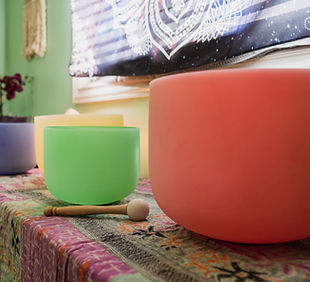
Sound baths and vibrational practices use singing bowls, tuning forks, gongs, voice, or music to create a focused listening experience. Music and sound may support relaxation, mood, or stress relief for some people, but claims that frequencies recalibrate energy fields or clear chest “stagnation” are not established. Keep volume comfortable and use caution with migraines, sound sensitivity, hearing conditions, or trauma triggers.

Reflexology
Reflexology applies pressure to mapped points on the feet or hands that practitioners traditionally associate with other body areas. Some people find the touch relaxing, but the maps are not anatomically established and reflexology has not been shown to improve lymphatic drainage or treat breast or chest conditions. Avoid pressure over wounds and seek clinical care for swelling, redness, warmth, or pain.

Red Light Therapy
Red and near-infrared light treatments, also called photobiomodulation, use specific wavelengths and doses. Evidence depends on the exact device and condition; broad claims about reducing inflammation, healing scars, or speeding post-surgical recovery are not established for every use. Before using it near a tumor, fresh incision, radiation-damaged skin, or with photosensitizing medicine, ask the treating clinician. Protect eyes and follow device instructions.

Aura Healing
Aura healing is a spiritual practice based on the belief that an energetic field surrounds the body. Practitioners may use visualization, intention, or hands held near the body to clear or balance that field. Auras have not been established as measurable medical mechanisms, and aura work has not been shown to treat physical or emotional illness. It may still hold personal or spiritual meaning.

Biofield Tuning
Biofield Tuning is a contemporary sound practice that uses tuning forks while practitioners describe sensing and balancing a person’s biofield. The proposed biofield and claims of locating stored trauma or energetic stagnation have not been established as medical mechanisms. Some people may find the sound and focused attention relaxing, but it should not replace trauma-informed therapy or medical care.

Breathwork
Breathwork includes many practices, from slow paced breathing to more intense patterns. Gentle breathing exercises may help some people feel calmer or more grounded. Fast or prolonged techniques can cause dizziness, tingling, fainting, panic, or symptom flare-ups. Stop if unwell, and seek qualified guidance if you are pregnant or have heart, lung, neurologic, or trauma-related concerns.

Polarity Therapy
Polarity therapy combines gentle touch, movement, nutrition ideas, and an energy-balancing framework. Its proposed electromagnetic or energetic mechanisms are not established, and evidence for specific health outcomes is limited. Some people may experience relaxation or body awareness, but it should not be presented as improving lymph flow or treating breast or chest conditions.
Quantum Touch
Quantum-Touch is a hands-on or hands-near-body practice that combines focused breathing, attention, and the intention to direct energy. The proposed energy transfer has not been established, and the practice has not been shown to reduce pain or speed recovery. A session may feel relaxing or spiritually supportive, but it should complement—not replace—medical evaluation, rehabilitation, or pain care.